
A small garden is not a limitation. It is an opportunity. Whether you have a narrow strip behind a terraced house, a compact courtyard, or a modest patch of lawn, the right design choices can turn limited space into something genuinely beautiful.
The challenge most homeowners face is not a lack of ideas, it is picturing how those ideas will actually look in their specific garden. That is exactly what Rescape AI is built for. Upload a photo of your outdoor space and generate professional design visuals in seconds, no landscaping experience required.
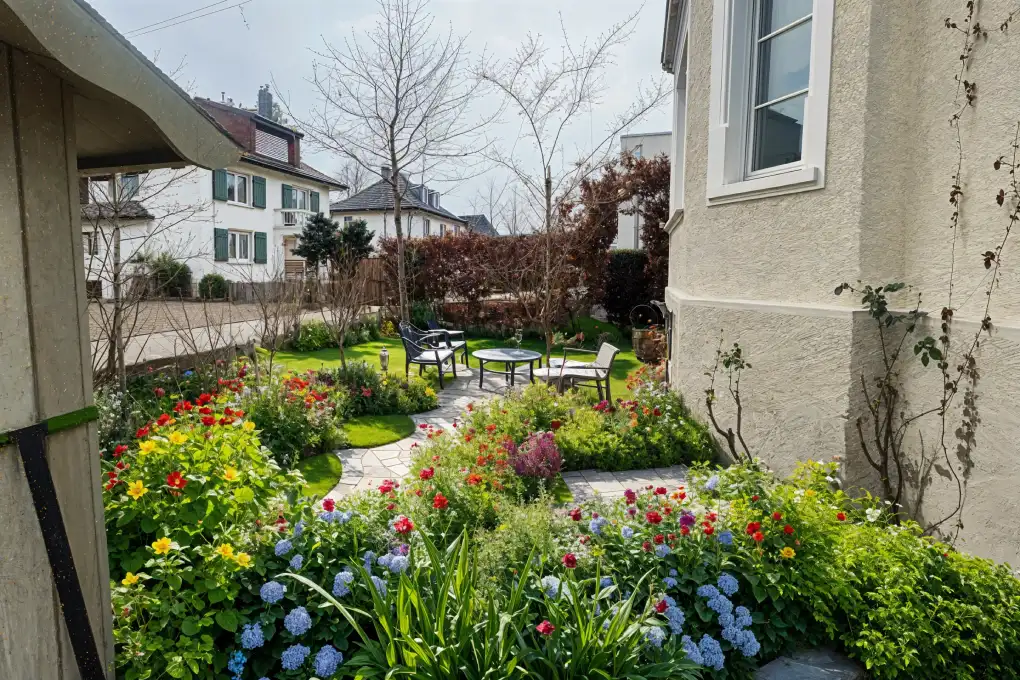
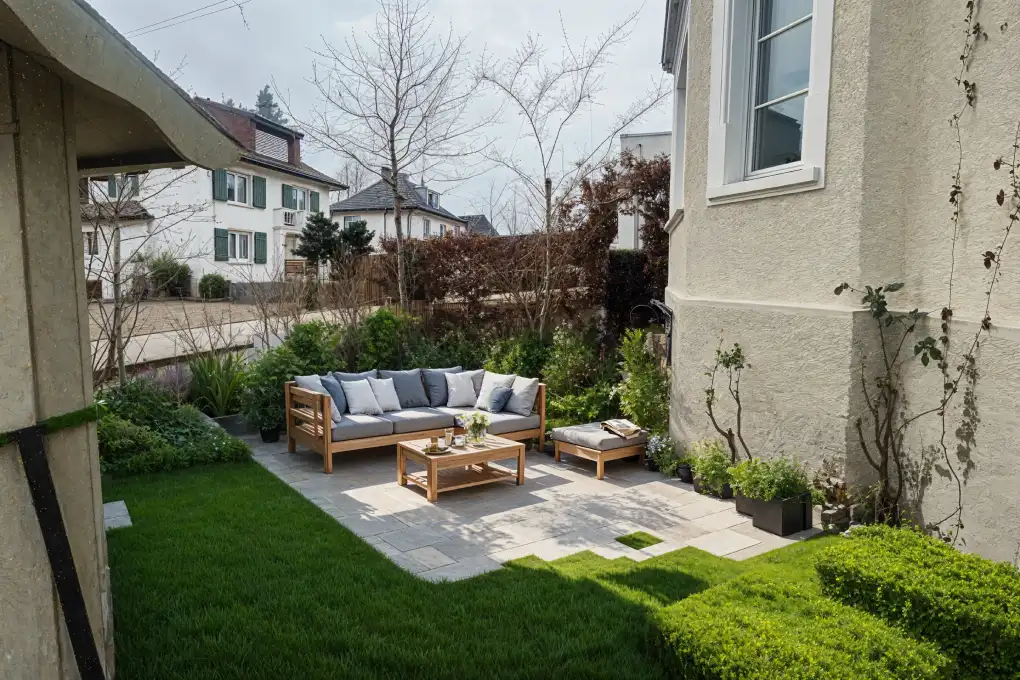
If time is limited, the design needs to do some of the work for you. These approaches keep a small garden looking good without constant upkeep.
Gravel or paved surfaces eliminate the need to mow and edge. A single well-planted border alongside a hard-landscaped base is far easier to manage than a small lawn surrounded by fiddly edging. Choose gravel in a tone that complements your house, not one that dates it.
Evergreen planting is your friend. Structural plants like box, pittosporum, and phormium hold their shape year-round and require little attention. Mix in one or two seasonal performers, an allium flush in spring, a late-summer grass, to add movement without adding work.
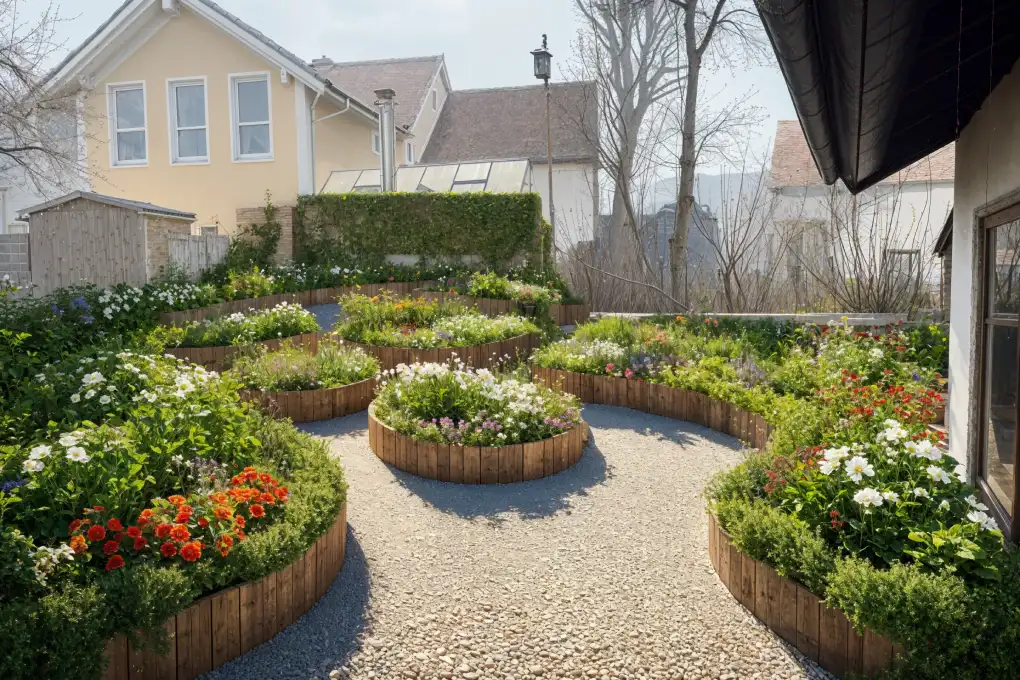
Raised beds contain weeding, improve drainage, and define zones clearly. They also add physical structure to a space that might otherwise feel flat.
Contemporary small gardens tend to prioritise clean lines, quality materials, and a limited plant palette. Less is more. A single species planted in repetition looks more deliberate and impactful than a busy mix of everything.
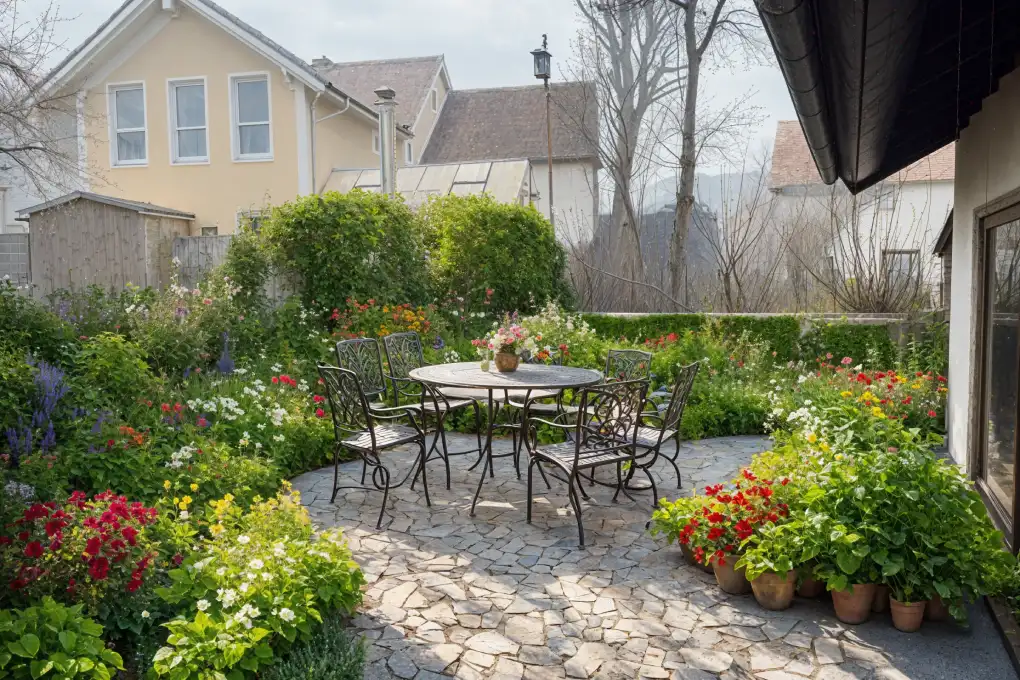
Porcelain paving tiles have become a popular choice for modern schemes. They are durable, easy to clean, and available in large formats that make a small space feel more expansive. Pair with steel edging and architectural planting for a considered, high-end finish.
Corten steel planters, simple timber pergolas, and recessed lighting are details that elevate a small garden from functional to designed. Used sparingly, they signal intent without overwhelming the space.
Front gardens are often the most neglected because they are the most exposed. A few plants in pots, a maintained hedge, or even a simple gravel bed with a statement shrub can dramatically improve kerb appeal.
If you have parking to consider, permeable paving over a planted border is both practical and visually far better than a solid tarmac or concrete finish. A narrow planting strip along the fence or boundary keeps the space from feeling entirely hard.
Rescape AI can be used on front garden photos just as easily as back gardens. If you are not sure how a hedge, a gate style, or a new planting bed would look, generate a few variations before committing to any work.
The hardest part of small garden planning is committing to changes before you can see how they will look. Rescape AI removes that barrier. Upload a photograph of your existing garden — any size, any condition, choose a style direction, and generate realistic design visualisations in seconds.
You can experiment with without spending a penny on landscaping. It is the fastest way to move from vague ideas to a clear design direction.
Focus on one statement area rather than trying to do everything at once. New paving or a well-planted raised bed makes more impact than spreading budget thinly. Rescape AI can help you test ideas before you spend anything.
Yes. Rescape AI works with any outdoor space, regardless of size. Upload a photo of your garden and generate design ideas instantly.
Keep hard surfaces clean and consistent in material. Use large pots rather than many small ones. Add height with a climber or a trained wall shrub. Keep furniture minimal and proportionate.
Absolutely. A well-designed small garden is often more usable and visually satisfying than a larger, poorly considered one. Good design is about proportion and intention, not size.
© Rescapeai 2024
[email protected]